
Walk into any door showroom in South Florida and you will eventually land on this question. Both fiberglass and steel doors are widely available. Both come in impact-rated versions that meet Florida’s strict hurricane codes. Both are marketed as durable, secure, and long-lasting. And both have genuine advocates who will tell you their preferred option is the obvious winner.
The truth — as is usually the case with these comparisons — is more nuanced than that. The right choice depends on where your home is located, how close you are to the water, what your priorities are, and what you are willing to invest upfront versus over the long term.
This guide gives you a straight, honest comparison of both materials specifically in the context of Florida’s climate, building code requirements, and real-world performance so you can walk into that conversation with a contractor knowing exactly what you are looking for.
Why the Florida Climate Makes This Decision More Important
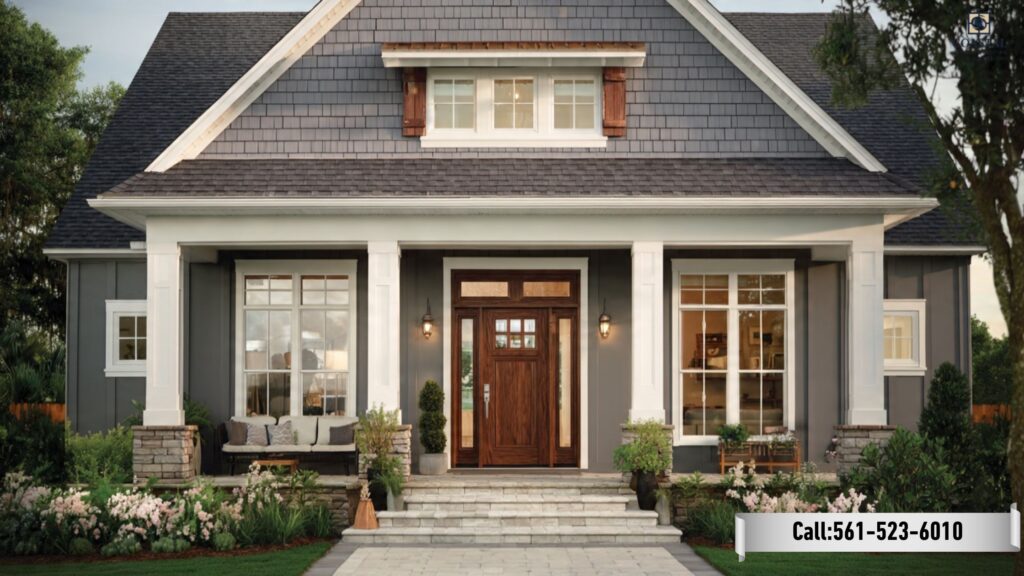
Before comparing the two materials directly, it is worth understanding what Florida specifically demands from an exterior door — because the conditions here are genuinely different from most of the country.
Florida’s combination of intense UV radiation, year-round high humidity, frequent heavy rain, and hurricane-season wind and pressure creates an environment that accelerates material degradation faster than moderate climates. Homes near the coast add salt air into that equation — a corrosive environment that attacks metal finishes, compromises seals, and shortens the service life of products that were not designed with coastal exposure in mind.
On top of climate, Miami-Dade and Broward County require that any exterior door installed in a high-velocity hurricane zone carry a Miami-Dade Notice of Acceptance (NOA) certification. Both fiberglass and steel doors are available in NOA-certified impact versions — but not every product in either category qualifies. Confirming certification before purchasing is essential.
With that context set, here is how the two materials actually compare.
Fiberglass vs Steel Doors: The Florida-Friendly Choice
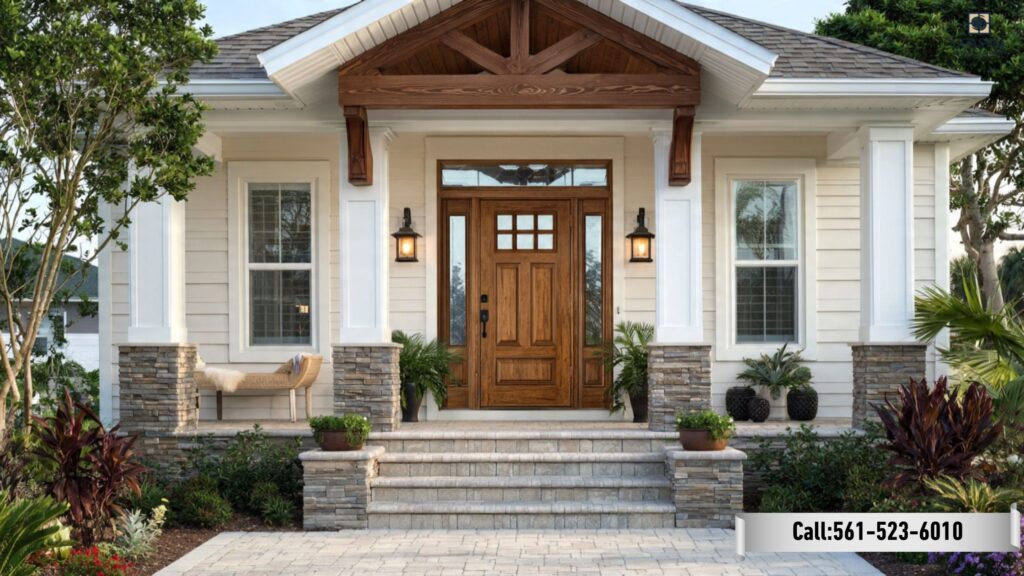
Fiberglass has emerged as one of the most popular door materials for Florida homes over the past decade — and the reasons become clear quickly when you look at how it handles the state’s specific conditions.
Corrosion and Moisture Resistance
Fiberglass does not rust. It does not corrode. It does not absorb moisture. In a state where humidity is constant and salt air is a real concern for coastal and near-coastal homeowners, that performance profile is genuinely significant. A fiberglass door ten years into its service life in a South Florida home will look and perform essentially the same as it did on installation day — assuming it was properly installed and maintained.
This resistance to moisture and corrosion also means fiberglass doors do not warp. Wood swells and contracts with humidity changes. Steel can swell slightly under extreme conditions. Fiberglass holds its shape consistently, which means the door continues to seal properly year after year.
Energy Efficiency
Fiberglass doors typically contain a foam core — either polyurethane or polystyrene — that provides meaningful thermal insulation. In Florida’s intense heat, a well-insulated door reduces the solar heat transfer into your home, which takes load off your air conditioning system and reflects in your monthly energy bills.
When combined with proper weatherstripping, a quality threshold, and impact-rated glass inserts with low-E coating, a fiberglass door can deliver strong overall energy performance.
Aesthetics and Customization
One of fiberglass’s genuine strengths is visual flexibility. Modern fiberglass doors can be manufactured to closely replicate the look of real wood grain — including the texture and depth that makes wood doors so visually appealing — without any of wood’s maintenance demands. They accept paint and stain readily, which gives homeowners significant flexibility in matching or complementing their home’s exterior.
For the craftsman, Mediterranean, and traditional architectural styles that are common throughout South Florida, fiberglass doors can deliver a premium aesthetic at a lower long-term maintenance cost than actual wood.
The Trade-Off
The main limitation of fiberglass is upfront cost. Fiberglass doors typically run more expensive than comparable steel options at the point of purchase. However, when you factor in the significantly lower maintenance requirements over the life of the door and the superior resistance to Florida’s specific climate conditions, many homeowners find the long-term value equation favors fiberglass strongly.
Steel Doors: Strength, Security, and Value
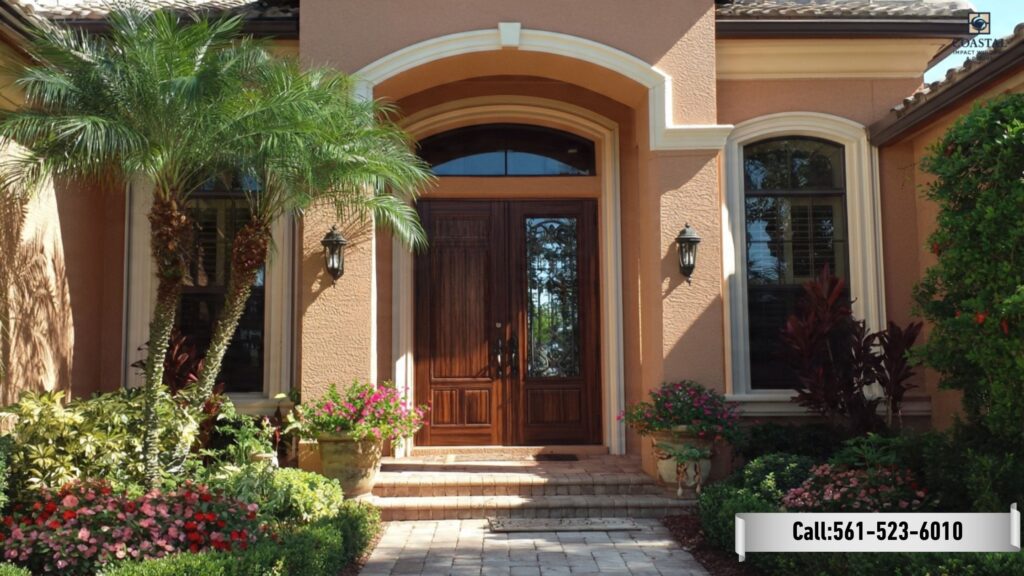
Steel has its own genuine strengths — and for the right application and the right homeowner, it remains a solid choice even in Florida’s demanding environment.
Structural Strength and Security
Steel is inherently strong. A solid steel door offers a high level of forced-entry resistance that makes it a popular choice for homeowners who prioritize security as a primary concern. The structural rigidity of steel also contributes to strong wind resistance performance when properly anchored and certified.
Initial Cost Advantage
Steel doors typically cost less upfront than comparable fiberglass options. For homeowners working within a tighter budget or prioritizing value at the point of purchase, that price difference can be meaningful — particularly when replacing multiple exterior doors at once.
The Florida Problem: Corrosion
Here is where steel hits its most significant limitation in a Florida context — particularly for coastal and near-coastal homes. Steel corrodes when exposed to moisture and salt air. Even with quality factory finishes and paint coatings, the reality is that steel doors in high-humidity, salt-air environments require regular maintenance to prevent rust from developing — particularly around edges, frames, and any area where the finish gets scratched or chipped.
Neglected maintenance on a steel door in South Florida leads to rust progression that is difficult and expensive to reverse. Once rust has worked its way into the door’s structure or frame, the door typically needs to be replaced rather than repaired.
This does not make steel a bad choice for every Florida home. For inland properties away from significant coastal exposure, a quality steel door with proper maintenance can perform well for many years. But for waterfront homes, beachside properties, or any location within a few miles of the ocean, the corrosion risk is a serious consideration that often tips the balance toward fiberglass.
Energy Efficiency Comparison
Steel doors also conduct heat more readily than fiberglass — meaning they transfer exterior heat into the home more efficiently, which in Florida’s climate works against you. Quality steel doors include insulating foam cores that improve thermal performance significantly, but they generally still trail fiberglass on raw energy efficiency.
Side-by-Side: Fiberglass vs Steel for Florida Homes
| Factor | Fiberglass | Steel |
|---|---|---|
| Corrosion resistance | Excellent — will not rust | Moderate — requires maintenance |
| Salt air performance | Excellent | Fair — risk in coastal areas |
| Energy efficiency | Very good | Good with foam core |
| Security performance | Very good | Excellent |
| Maintenance requirements | Very low | Moderate to high in Florida |
| Aesthetics and customization | High — wood grain options | Moderate |
| Upfront cost | Higher | Lower |
| Long-term value in Florida | Excellent | Good for inland locations |
Which One Should You Choose?
For most Florida homeowners — and especially for anyone within a few miles of the coast — fiberglass is the stronger choice. The combination of corrosion immunity, moisture resistance, strong energy efficiency, low maintenance demands, and design flexibility makes it well-suited to Florida’s specific conditions in a way that steel simply cannot match in the long run.
Steel makes sense for inland Florida properties where coastal exposure is not a significant factor, for homeowners where upfront cost is the primary constraint, or where maximum security performance is the overriding priority and maintenance is not a concern.
The team at Coastal Impact Windows and Doors works with both fiberglass and steel impact-rated door products and can help you evaluate which material is the right fit for your home’s location, exposure, and budget. The right answer depends on your specific situation — and a knowledgeable local company can give you an honest recommendation rather than steering you toward whatever carries the highest margin.
Installation Quality Is the Final Variable
Regardless of which material you choose, the installation quality determines how well the door actually performs over its service life. A premium fiberglass door improperly installed will leak air, allow moisture intrusion, and underperform on every metric that matters.
Proper installation means correct rough opening preparation, quality weatherstripping, a proper threshold, multi-point locking hardware, correct anchoring for hurricane zones, and a fully permitted inspection that confirms the installation meets Florida building code.
Coastal Impact Windows and Doors handles the complete installation process for impact-rated fiberglass and steel doors across South Florida — including full permit handling, licensed installation, and NOA-certified products for every project. Visit coastalimpactwindowsanddoorsfl.com to request your detailed in-home quote and find out which door is the right fit for your home.