
Your front door does more work than most homeowners give it credit for. It is the first thing people see when they pull up to your home. It is the barrier between your living space and whatever Florida weather decides to deliver on any given day. It affects how much heat gets in, how secure your home is, and — in South Florida — whether your home can legally meet the building code requirements that hurricane season makes non-negotiable.
Choosing the right entry door for a Florida home is not complicated once you understand what actually matters. But it is also not as simple as picking a style you like from a catalog and calling a contractor. The material, the certification, the glass options, the hardware, and the installation quality all feed into how that door performs over the next twenty years.
Here is a straightforward guide to making the right call for your specific home.
Start With Florida’s Non-Negotiable: Impact Certification
Before aesthetics, before material, before price — the first question for any South Florida homeowner replacing an entry door is whether it carries Miami-Dade Notice of Acceptance (NOA) certification.
In Miami-Dade and Broward County, this is a legal requirement under building code for any exterior door installed in a high-velocity hurricane zone. An NOA certification confirms the door has been independently tested and proven to withstand extreme wind speeds and hurricane-force debris impact. It is not a marketing label. It is the standard that makes a door legally installable in your county and genuinely protective when a serious storm arrives.
Any contractor who cannot immediately confirm the NOA certification on the door they are proposing — or who cannot produce the documentation when you ask — is either working with uncertified product or does not know their product well enough to be doing this work. Either way, that is a conversation worth ending early.
Start here. Everything else comes after.
Material: The Decision That Shapes Everything Else
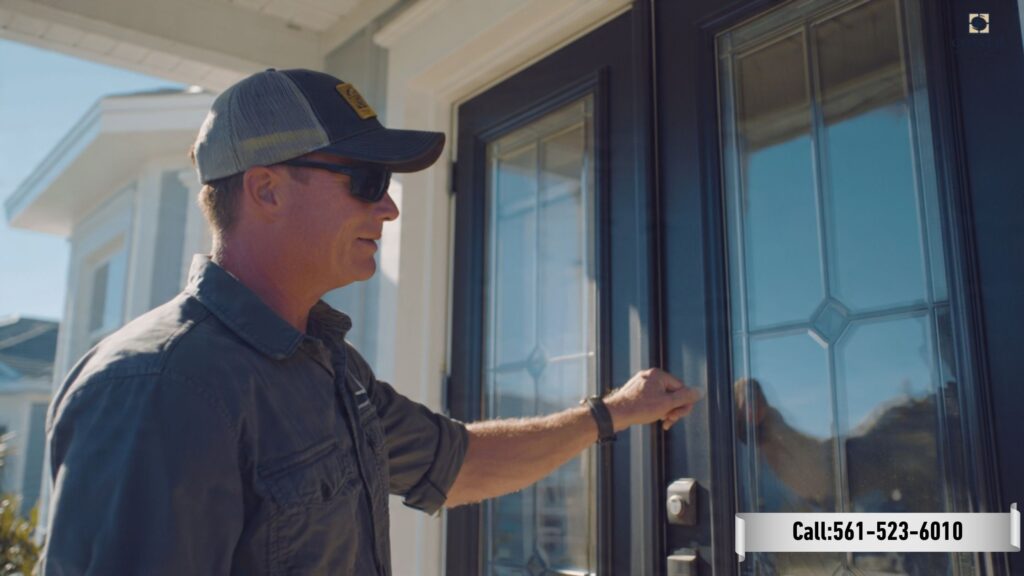
Once you have confirmed impact certification is on the table, material choice is the decision that affects nearly everything downstream — durability, maintenance, energy efficiency, aesthetics, and long-term cost.
Fiberglass is the most well-rounded option for Florida’s specific conditions and the choice that serves most homeowners best in this climate. It does not rust, does not corrode, does not absorb moisture, and does not warp under humidity changes. Florida’s combination of heat, humidity, and coastal salt air creates conditions that accelerate material degradation rapidly — and fiberglass handles all of those conditions with the least maintenance required over time.
Modern fiberglass doors also replicate the look of real wood grain convincingly. If you want the warmth and character of a wood door without the maintenance demands — which are significant in Florida’s humid climate — fiberglass gives you that aesthetic at a fraction of the long-term upkeep cost.
Steel doors offer excellent security performance and a lower upfront price point. In inland Florida locations away from significant coastal exposure, steel can be a solid choice when properly maintained. The limitation in South Florida — particularly for coastal and near-coastal homes — is corrosion. Salt air and persistent humidity accelerate rust on steel surfaces, and once it starts the maintenance burden becomes ongoing and significant. For most South Florida homeowners, fiberglass is the more durable long-term investment.
Wood doors are beautiful and warm but demanding in Florida’s climate. Humidity causes wood to swell, contract, and eventually warp if not properly sealed and maintained. Paint and finish maintenance is a recurring requirement. For the homeowner committed to that upkeep and willing to invest in quality solid wood, it can work — but it is the highest-maintenance option in this climate by a clear margin.
The team at Coastal Impact Windows and Doors works with fiberglass, steel, and specialty impact entry doors across South Florida and can help you evaluate which material is genuinely the right fit for your home’s location, exposure, and budget.
Glass Inserts: Where Function and Style Intersect
Many entry doors include decorative glass inserts — sidelights, transoms, or door glass panels — and in Florida, those glass elements need to be specified carefully.
Impact-rated glass is required for any glass that is part of the door assembly in a high-velocity hurricane zone. That means the glass insert must be part of the door’s NOA certification — not an afterthought added after the fact. Always confirm that the door and glass assembly is tested and certified together as a unit.
Beyond impact performance, low-E glass coatings are worth specifying for any glass insert facing west or south. Low-E coatings significantly reduce solar heat transfer through the glass, which in Florida’s intense sun means less heat coming through your front door and less work for your air conditioning system every single day. The upgrade cost is modest. The cumulative energy savings over years of Florida summers are not.
Decorative glass also affects privacy and security. Frosted, textured, or obscure glass options give you the natural light benefits of a glass insert without putting a clear view of your entryway on display from the street. For front-facing doors particularly, that balance between light and privacy is worth thinking through before you commit to a specific design.
Hardware and Locking Systems: Not Where to Cut Corners
The hardware on your entry door affects security, weather resistance, and how the door performs under wind pressure — all of which matter more in Florida than in most places.
Multi-point locking systems are worth specifying on any impact entry door in a hurricane zone. Standard single-point locks engage the frame at one location. Multi-point systems engage at three or more points simultaneously — significantly improving both forced-entry resistance and the door’s ability to maintain a tight seal along the full height of the frame under wind pressure. This is not a luxury upgrade in South Florida. It is genuinely practical.
Finish matters in coastal environments. Hardware finishes that look great in a showroom can corrode quickly in salt air without proper coating. Stainless steel and marine-grade bronze finishes hold up significantly better in coastal Florida conditions than standard brass or nickel finishes. Ask specifically about coastal-grade hardware when you are near the water.
Style: Matching Your Door to Your Home’s Character
With the functional requirements covered, aesthetics become the enjoyable part of the decision.
Florida’s architectural landscape is genuinely diverse — modern and contemporary homes with clean lines and minimal ornamentation sit a few blocks from classic Mediterranean-inspired designs with arched doorways and decorative ironwork, which sit near traditional craftsman bungalows and mid-century ranches. The right entry door style anchors your home’s exterior rather than fighting it.
A few practical considerations for Florida specifically:
Darker door colors absorb more heat. In a state with intense sun exposure, a dark-painted fiberglass door facing south or west will get significantly hotter than a lighter-colored option. That heat transfers into the door material and frame and can affect weatherstripping longevity over time. Lighter colors or finishes with good UV resistance handle Florida’s sun more gracefully.
Sidelights expand the entry without a larger door. If your entry feels narrow or dark, adding fixed sidelights on one or both sides of the door brings in natural light and creates a more generous entryway without the cost and structural work of widening the opening.
Transoms add light without sacrificing privacy. A transom window above the door brings in light from a height that does not compromise privacy — a practical addition to any Florida entryway that also breaks up the vertical mass of a tall door.
Installation Is the Final Variable That Determines Everything
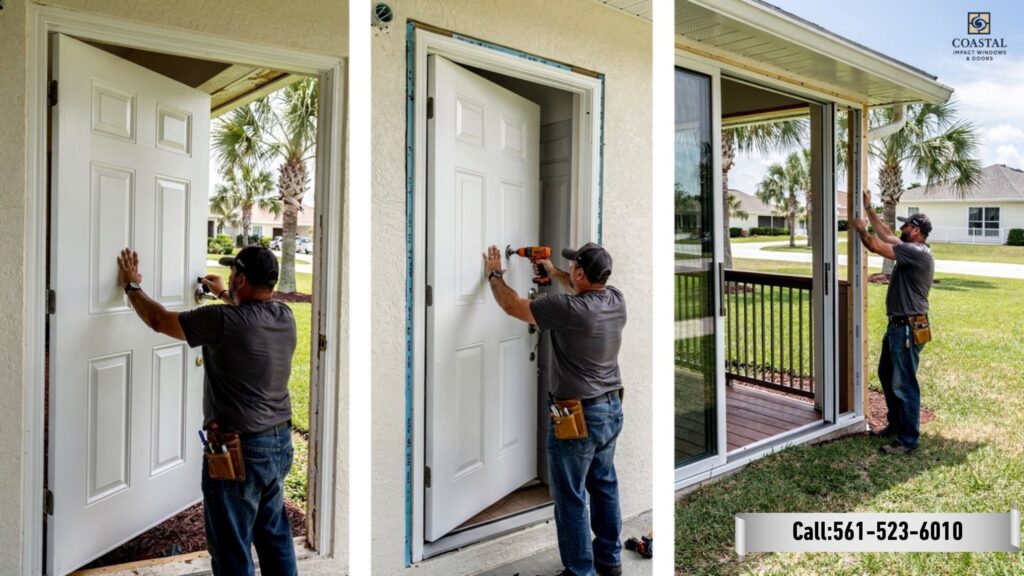
The best entry door on the market performs poorly when it is not installed correctly. In Florida, where the door will face hurricane-season wind pressure, persistent humidity, and intense UV exposure, installation quality directly determines how long the door maintains its appearance, its seal, and its structural performance.
Proper installation means the rough opening is correctly prepared and squared before the door goes in. It means quality weatherstripping and a proper threshold that seals out air and moisture at the bottom. It means correct hurricane-zone anchoring. And it means a fully permitted inspection confirming the installation meets Florida building code — which requires permits in virtually every Florida jurisdiction for exterior door replacement.
Your contractor should be handling the permit application, building department coordination, and inspection scheduling as a standard part of the job. If that is not explicitly included in your quote, ask about it directly before signing anything.
Coastal Impact Windows and Doors handles the complete entry door installation process across Miami-Dade, Broward, and Palm Beach County – NOA-certified products, full permit handling, and licensed professional installation on every project.
Visit coastalimpactwindowsanddoorsfl.com to request your detailed in-home consultation and find the right entry door for your Florida home.