
At some point in almost every renovation or new build, someone looks at an opening — an oddly shaped wall, an oversized living room facade, an architectural detail that does not match any catalog size — and asks whether a custom window is the answer. Often it is. But custom window installation comes with its own set of considerations that standard replacement projects simply do not involve, and going in informed makes the difference between a smooth project and one full of surprises.
This guide walks through what custom windows actually are, when they make sense, what they cost, and what to expect from the installation process — particularly in Florida, where building code requirements add another layer to the equation.
What Counts as a Custom Window
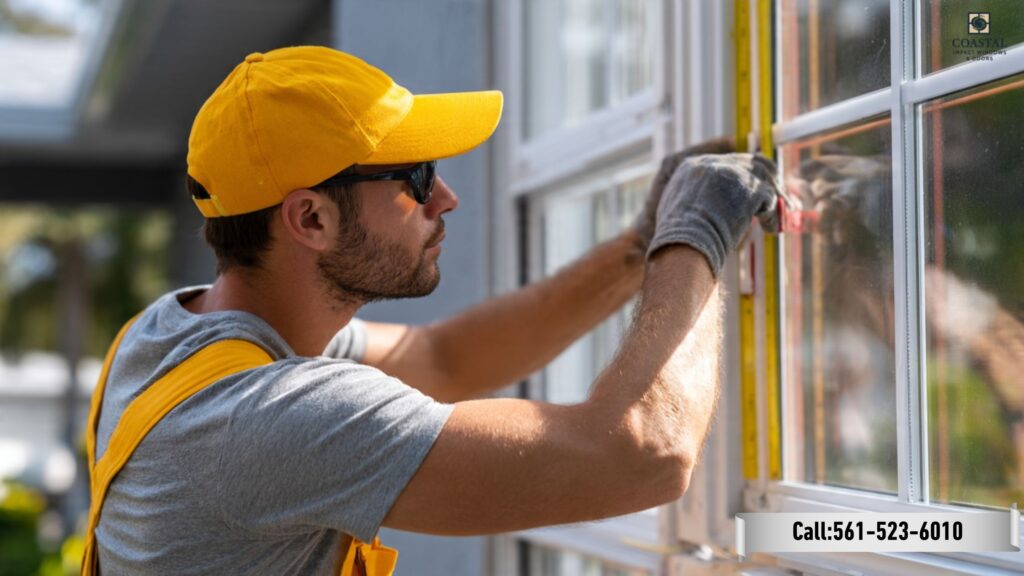
When people hear “custom window”, they often picture something dramatic — an arched window, an octagon, a trapezoid following a roofline. Those are custom windows, certainly. But custom also includes situations that are far more common and less visually unusual.
Oversized openings that exceed standard manufacturer dimensions require custom manufacturing even if the shape is a simple rectangle. Non-standard dimensions — an opening that does not match any stock size, even by a few inches — often require custom production rather than forcing a stock unit to fit. Unique architectural shapes — arches, circles, ellipses, trapezoids, and angled configurations that follow a roofline or architectural feature — are custom by definition. Specialty configurations — corner windows, curved glass, oversized picture windows designed to frame a specific view — all fall into custom territory.
The common thread is that custom windows are manufactured to the specific dimensions and configuration of your opening rather than selected from a range of pre-manufactured stock sizes. That distinction affects cost, timeline, and the installation process in ways worth understanding upfront.
Why Homeowners Choose Custom Windows
Architectural integrity is one of the most common drivers. Homes with distinctive architectural features — arched doorways, curved facades, angled rooflines — often have window openings that simply do not match any standard size. Forcing a stock window into a non-standard opening typically means either reducing the opening size with additional framing (which changes the look and reduces natural light) or accepting a poor fit that compromises performance.
Maximizing views and natural light drives custom decisions in homes designed around a specific outlook — waterfront properties, homes overlooking golf courses or preserves, or any situation where the window itself is meant to be a feature rather than just an opening. Custom sizing allows the window to be designed around the view rather than the view being constrained by available stock sizes.
Renovation and addition projects frequently require custom windows simply because the new construction does not match the dimensions of existing openings elsewhere in the home, or because the design calls for something that does not exist as a stock product.
Replacing existing custom windows is its own category. If a home was built with custom windows originally — which is common in higher-end or architecturally distinctive properties — replacing them eventually requires custom manufacturing again, since the original openings were never designed around standard dimensions.
What Custom Window Installation Costs
Custom windows cost more than stock sizes — that part is intuitive. What is less intuitive is how much more, and what specifically drives that premium.
Custom rectangular windows — non-standard dimensions but conventional shape — typically run 20 to 40 percent more than the equivalent stock size would cost, assuming a stock size existed close to your dimensions. For a standard impact-rated window that would cost $700 to $1,100 installed at stock size, a custom rectangular equivalent might run $900 to $1,600 installed.
Oversized picture or fixed windows in custom dimensions: $1,200 – $3,500 installed, depending on size and glass specification.
Arched, circular, or curved custom windows: $1,500 – $4,500 installed, with curved glass configurations at the higher end of that range due to the manufacturing complexity involved.
Custom angled or trapezoid windows (following roofline configurations): $1,200 – $3,800 installed
Corner window configurations: $2,000 – $5,500 installed, depending on the complexity of the corner detail and structural considerations involved.
In Florida — and particularly in Miami-Dade and Broward County — every custom window installed in a high-velocity hurricane zone must carry Miami-Dade Notice of Acceptance (NOA) certification just like standard impact windows. Custom configurations require their own certification documentation specific to that configuration, which is part of why custom impact windows carry a meaningful premium over standard sizes — the certification and engineering work is configuration-specific, not generic.
What Affects the Timeline
This is one of the most important practical considerations for any custom window project. Stock windows are often available within days to a couple of weeks. Custom windows are manufactured to order, and that process takes meaningfully longer.
Typical custom window manufacturing timelines run 6 to 12 weeks from order placement to delivery, depending on the manufacturer, the complexity of the configuration, and current production demand. Highly specialized configurations — curved glass, complex multi-panel custom units — can run longer.
This timeline needs to be factored into your project planning from the start. If your project involves a hard deadline — closing on a renovation, preparing for a specific event, or working around hurricane season — the custom window lead time needs to be one of the first things discussed with your contractor, not something discovered after the rest of the project is already scheduled.
A good contractor orders custom windows early in the project sequence and plans other work around that timeline, rather than treating window delivery as an afterthought.
Installation Considerations Specific to Custom Windows
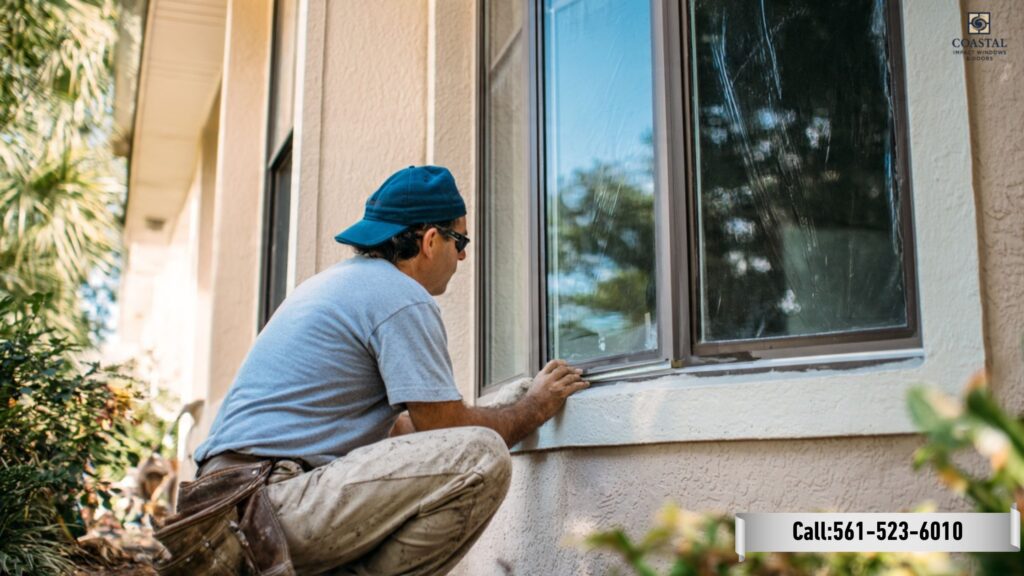
With stock windows, there is some forgiveness — minor measurement variances can sometimes be accommodated with shimming and trim adjustments. With custom windows, the manufacturing is based on the measurements provided, and there is far less room for error. A measurement mistake on a custom window means waiting through another full manufacturing cycle for a replacement — which can mean months of delay on a project.
Professional measurement by the installing contractor — not estimates, not measurements taken by a different party — is essential for custom window orders. The contractor responsible for installation should also be responsible for the measurements that determine manufacturing dimensions, so accountability for fit stays with the party doing the installation.
Rough opening preparation matters even more with custom windows. Because the window is manufactured to a specific dimension, the opening needs to match that dimension closely. Any structural issues, out-of-square conditions, or rough opening problems need to be identified and addressed before final measurements are taken — not discovered after a custom window arrives that does not fit the opening as it currently exists.
Custom flashing and waterproofing details are often required for unusual shapes and configurations. Arched windows, angled units, and corner configurations all require installation details that differ from standard rectangular windows. An installer with genuine experience in custom configurations understands these details. An installer who has only worked with stock windows may not.
The team at Coastal Impact Windows and Doors handles custom window projects across South Florida — from initial measurement through NOA-certified custom manufacturing and professional installation, including the specialized flashing and sealing details that custom configurations require.
Permits and Custom Windows
Custom windows still require permits in Florida, just like standard windows. What changes is the documentation involved. Because custom configurations need their own NOA certification specific to that configuration, the permit application needs to include documentation for the exact custom product being installed — not a generic reference to the product line.
This is another reason working with an experienced local contractor matters for custom projects. A contractor who regularly works with custom configurations knows how to assemble the documentation that Miami-Dade or Broward County building departments require for custom NOA-certified products, and how to navigate the permit process without delays caused by incomplete documentation.
Final Thoughts
Custom window installation opens up design possibilities that stock sizes simply cannot deliver — architectural integrity, maximized views, and solutions for openings that do not fit any standard category. The trade-offs are real: higher cost, longer lead times, and a process that demands more precision at every stage.
Going in with realistic expectations about cost and timeline, and working with a contractor experienced specifically in custom configurations and Florida’s certification requirements, makes the difference between a custom window that becomes a highlight of your home and one that becomes a source of ongoing frustration.
For South Florida homeowners considering a custom window project, visit coastalimpactwindowsanddoorsfl.com to schedule a consultation and discuss what a custom configuration would involve for your specific home.